Myth vs fact: Myth: the padlock means the site is secure.HTTPS encrypts the trip between the browser and the server. It says nothing about the page's scripts, headers and cookies, or about who is behind the site.Check it: Check what the padlock does not cover: response headers, cookie flags, outdated scripts and a DMARC record.How a public-page review works, step by step: carlosandmunoz.com/qa-review-guide.html#WebSecurity #Phishing #CyberSecurity #QA #HTTPS #QAlab
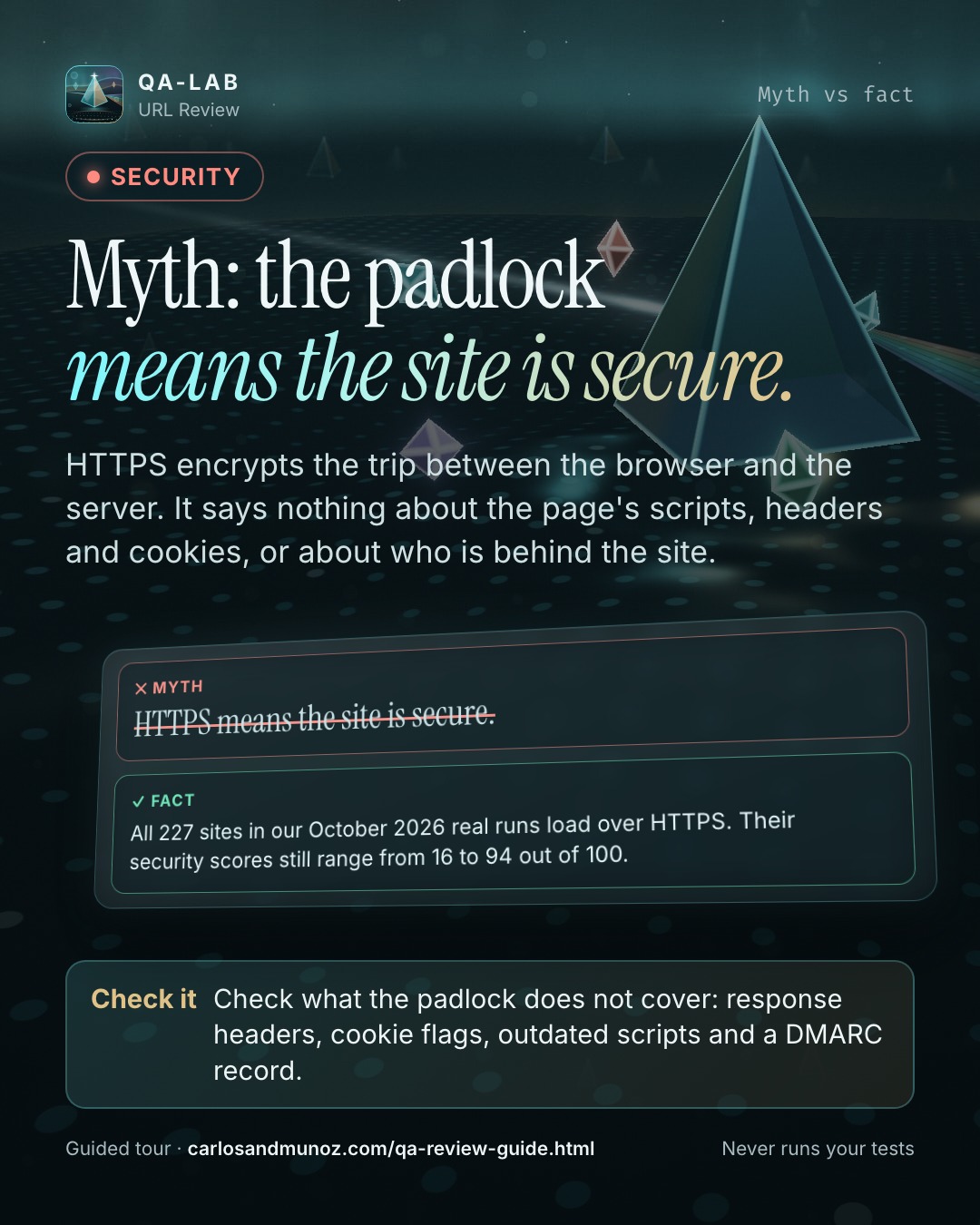
Myth vs fact: Myth: the padlock means the site is secure.

HTTPS encrypts the trip between the browser and the server. It says nothing about the page's scripts, headers and cookies, or about who is behind the site.

Check it: Check what the padlock does not cover: response headers, cookie flags, outdated scripts and a DMARC record.

How a public-page review works, step by step: https://carlosandmunoz.com/qa-review-guide.html?utm_source=linkedin&utm_medium=social&utm_campaign=evergreen-2026-11&utm_content=myth-https

#WebSecurity #Phishing #CyberSecurity #QA #HTTPS #QAlab
X
Myth: the padlock means the site is secure.

Check what the padlock does not cover: response headers, cookie flags, outdated scripts and a DMARC record.

carlosandmunoz.com/qa-review-guide?utm_source=x&utm_medium=social&utm_campaign=evergreen-2026-11&utm_content=myth-https
#QAlab
Instagram
Myth vs fact: Myth: the padlock means the site is secure.

HTTPS encrypts the trip between the browser and the server. It says nothing about the page's scripts, headers and cookies, or about who is behind the site.

Check it: Check what the padlock does not cover: response headers, cookie flags, outdated scripts and a DMARC record.

#WebSecurity #SoftwareTesting #QA #HTTPS #QAlab
Facebook
Myth vs fact: Myth: the padlock means the site is secure.

HTTPS encrypts the trip between the browser and the server. It says nothing about the page's scripts, headers and cookies, or about who is behind the site.

Check it: Check what the padlock does not cover: response headers, cookie flags, outdated scripts and a DMARC record.

https://carlosandmunoz.com/qa-review-guide.html?utm_source=facebook&utm_medium=social&utm_campaign=evergreen-2026-11&utm_content=myth-https

#WebSecurity #CyberSecurity #QA #QAlab
TikTok
Mythe : le cadenas veut dire que le site est sûr. Vérifiez ce que le cadenas ne couvre pas : en-têtes de réponse, attributs des cookies, scripts obsolètes et enregistrement DMARC. #WebSecurity #Phishing #CyberSecurity #QA #HTTPS #AppSec #Cybersécurité #QAlab
YouTube
HTTPS chiffre le trajet entre le navigateur et le serveur. Il ne dit rien des scripts, des en-têtes et des cookies de la page, ni de qui se trouve derrière le site.

Vérifiez: Vérifiez ce que le cadenas ne couvre pas : en-têtes de réponse, attributs des cookies, scripts obsolètes et enregistrement DMARC.

Guide: https://carlosandmunoz.com/qa-review-guide.html?utm_source=youtube&utm_medium=social&utm_campaign=evergreen-2026-11&utm_content=myth-https

Mythe ou réalité · QA-lab URL Review

#WebSecurity #Vulnerability #Phishing #QA #HTTPS #AppSec #Cybersécurité #DéveloppementWeb #Programming #LearnOnYouTube #Testing #QAlab